



Why Creatives Matter
Every media buyer has experienced the situation when two campaigns target similar audiences, use comparable budgets and promote nearly identical offers, yet one campaign scales profitably while the other struggles to generate clicks. More often than not, the difference is the creative.
A creative can fail for countless reasons. The audience may not relate to the message, the visuals may blend into the feed or the value proposition may simply arrive at the wrong moment. At the same time, successful creatives are rarely the product of luck. High-performing ads are usually built around proven advertising principles, psychological triggers and a clear understanding of user behavior.
To understand why certain ads outperform others, it's worth looking at the principles behind successful creatives.
The AIDA Model: Foundation of High-Converting Creatives
One of the most widely used advertising frameworks is the AIDA model. Despite being old, it remains highly relevant because it follows the natural decision-making process users go through before taking action.
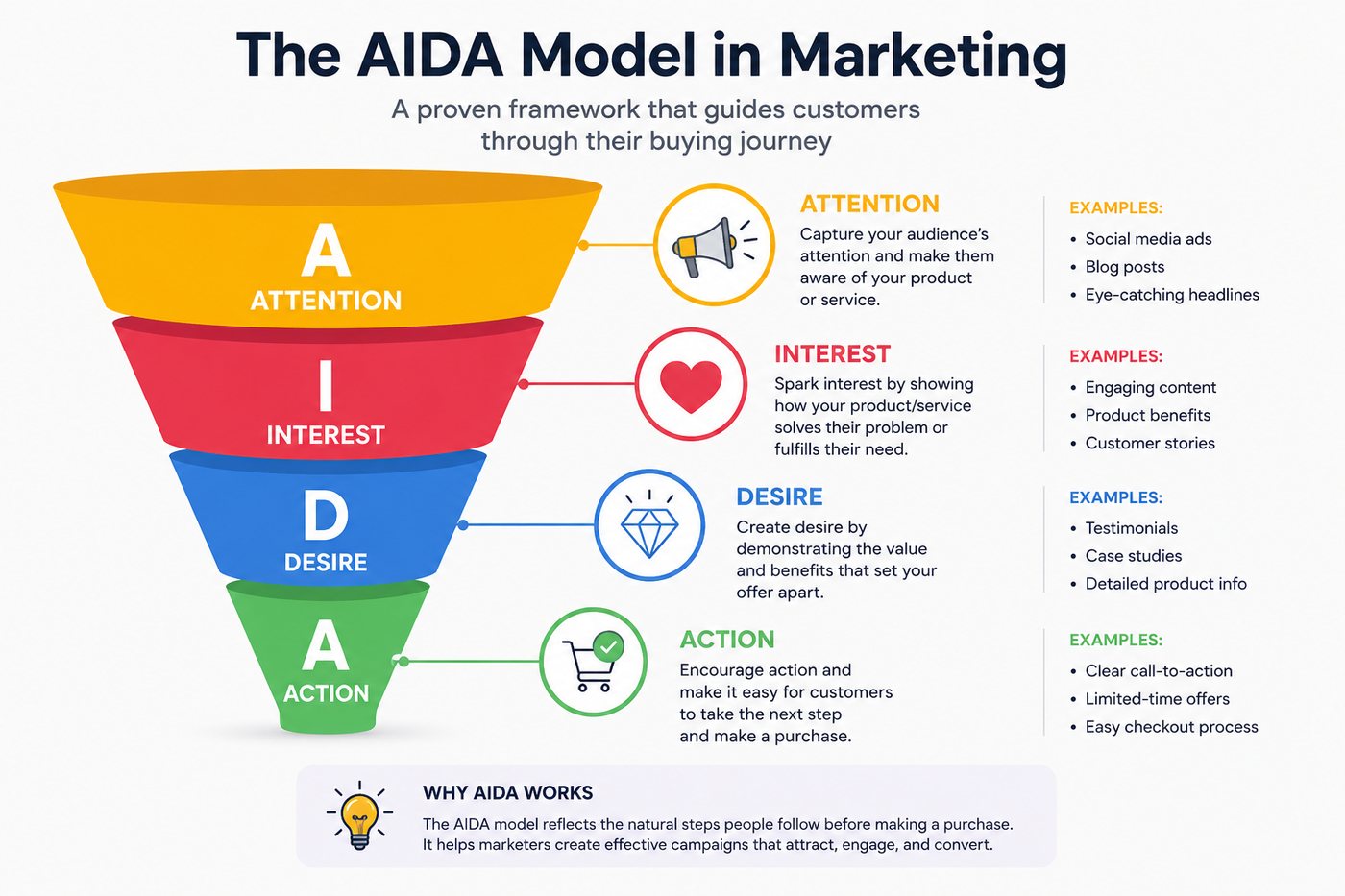
The first stage is Attention. Before anything else happens, the creative has to stop users from scrolling. Bright visuals, unexpected opening scenes, bold headlines or intriguing questions are all designed to earn those first few seconds. The goal isn't to explain the offer immediately, but to create just enough curiosity for people to keep watching.
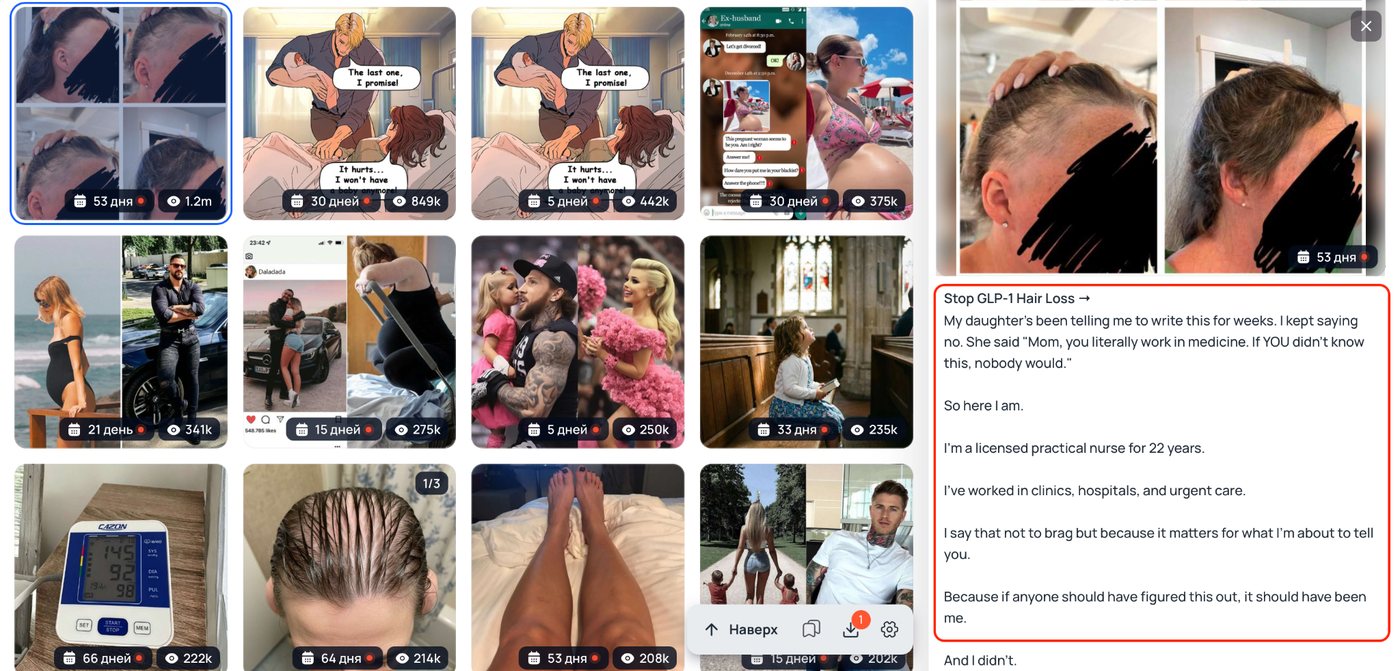
A story told by a nurse starts with an intriguing trigger and pushes us to read further.
After capturing attention, the creative needs to generate Interest. This is where the audience starts asking whether the content is relevant to them. Instead of making generic claims, successful creatives introduce a relatable problem or present information that encourages viewers to keep watching. A short demonstration of a product solving a common issue often performs better than simply listing features.
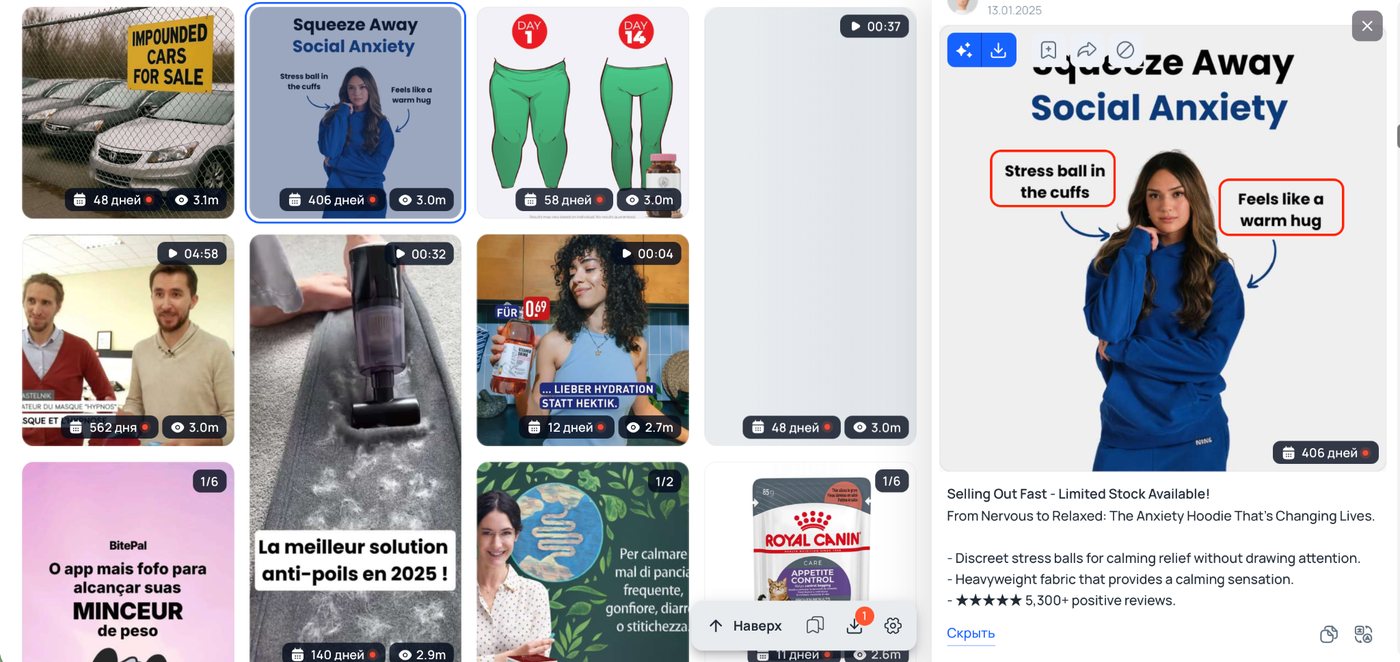
An unusual solution for people who often feel stress and anxiety.
The next stage is Desire. At this point, the creative shifts from describing the product to showing why the audience should want it. The focus moves from features to outcomes.
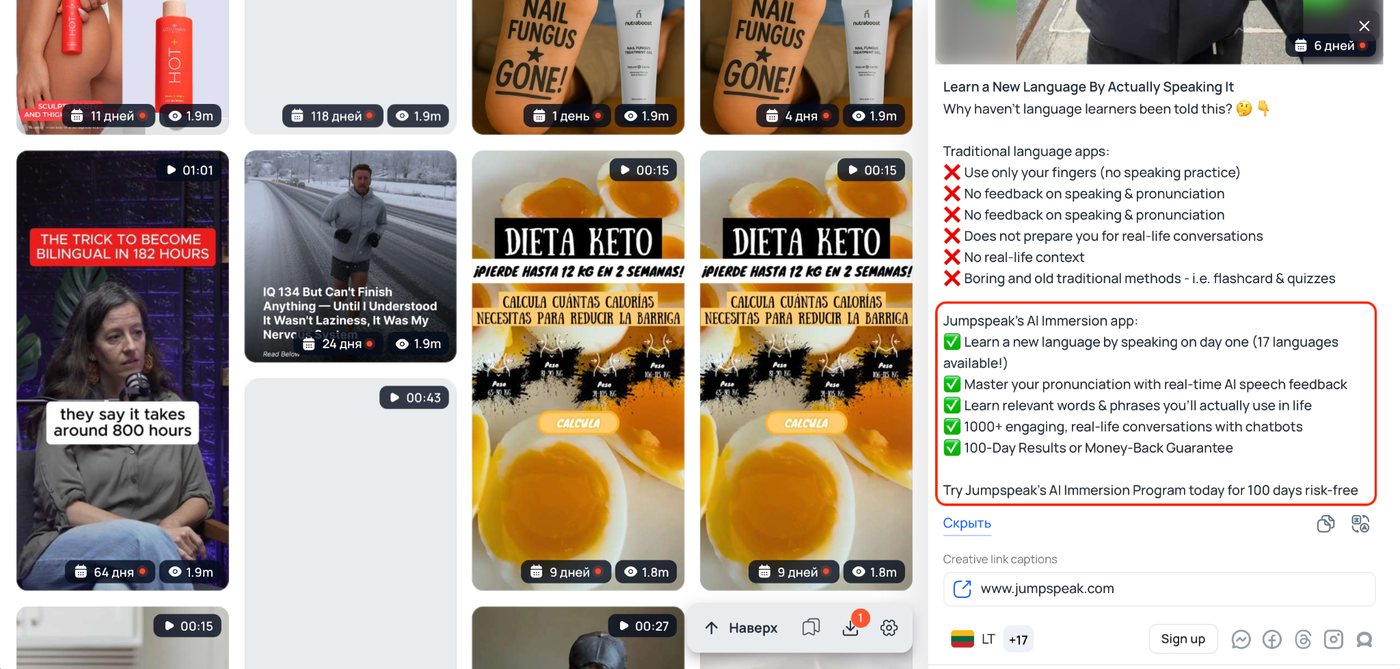
What a user can get after using an app.
Finally, the creative encourages Action as the audience needs a clear next step. Whether it's downloading an app, claiming a limited offer, registering for a webinar or starting a free trial, the call to action should feel like the logical conclusion of the story rather than an abrupt sales pitch.
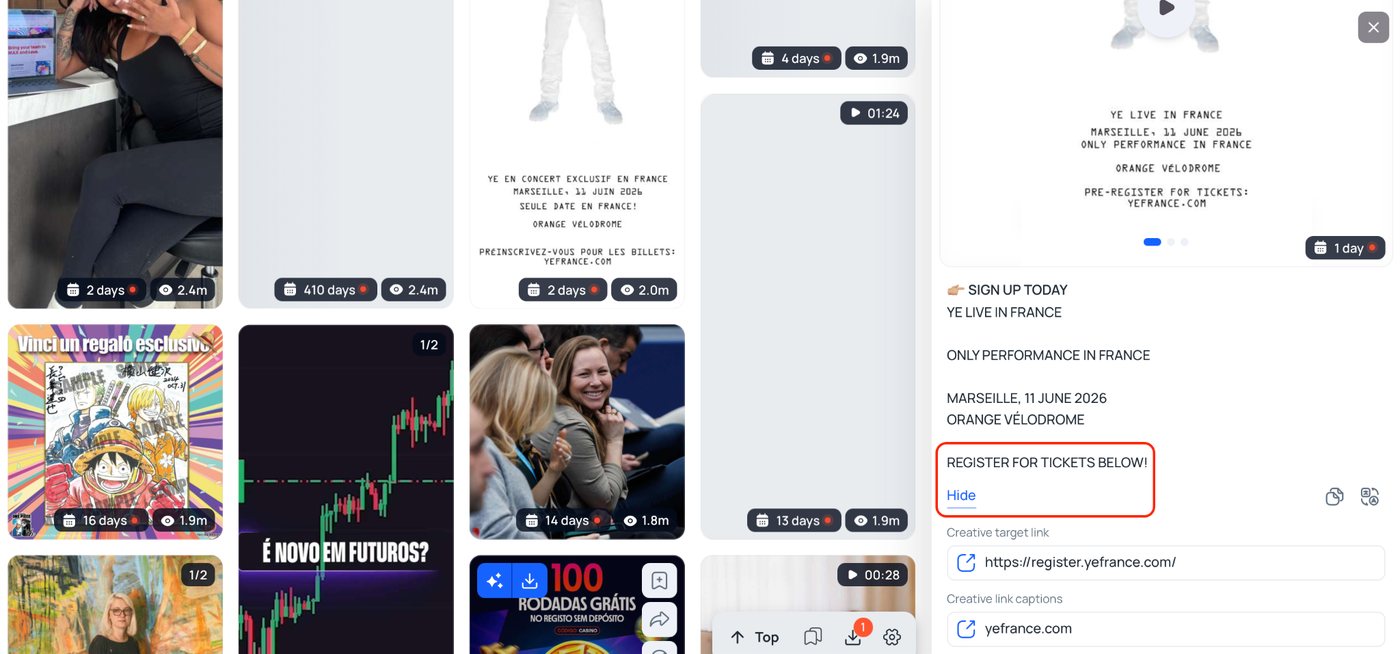
Registration to buy tickets seems logical as it requires some personal data.
Many campaigns naturally follow this sequence without explicitly trying to implement AIDA. The structure simply reflects how people make decisions.
Triggers That Improve Creative Performance
While AIDA provides the overall structure, several psychological triggers help strengthen each stage of the creative. Platforms like Tyver.io make these patterns easy to spot in real campaigns, allowing affiliate marketers to see not only how successful ads follow the AIDA framework but also which triggers other media buyers use to capture attention, build interest and drive conversions. Here are some practical examples of how these triggers in winning creatives look.
Social proof reduces uncertainty. People naturally feel more comfortable trying something that others have already chosen. A creative mentioning that over 100,000 users have downloaded an app or showing authentic customer reviews immediately adds credibility.

Review of an item in stock.
Expertise is another powerful trigger. Recommendations from IT professionals, doctors, financial experts can increase trust. Presenting information through their perspective often increases engagement.
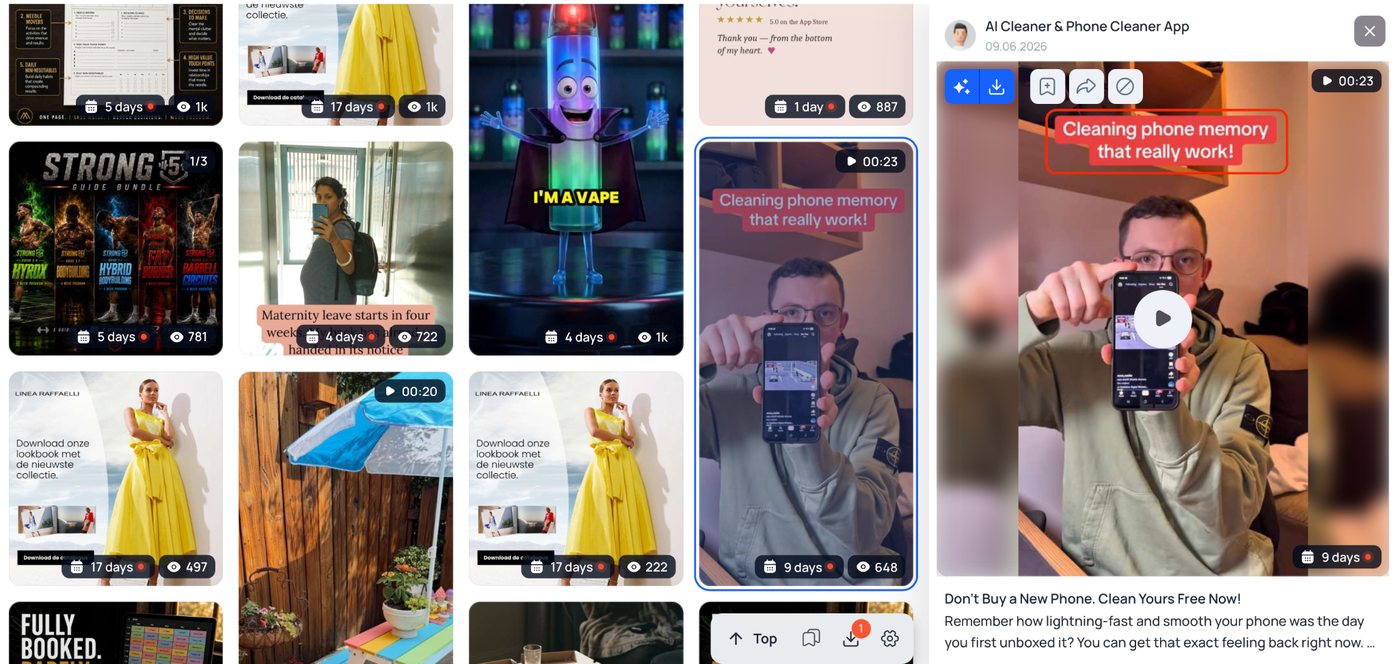
The ad offers a solution for a popular problem.
Sales offers create urgency by suggesting that an opportunity may disappear. Limited-time discounts, seasonal promotions, countdown timers or messages about limited availability encourage users to act sooner rather than postponing the decision. The key is making the limitation believable rather than artificially exaggerated.
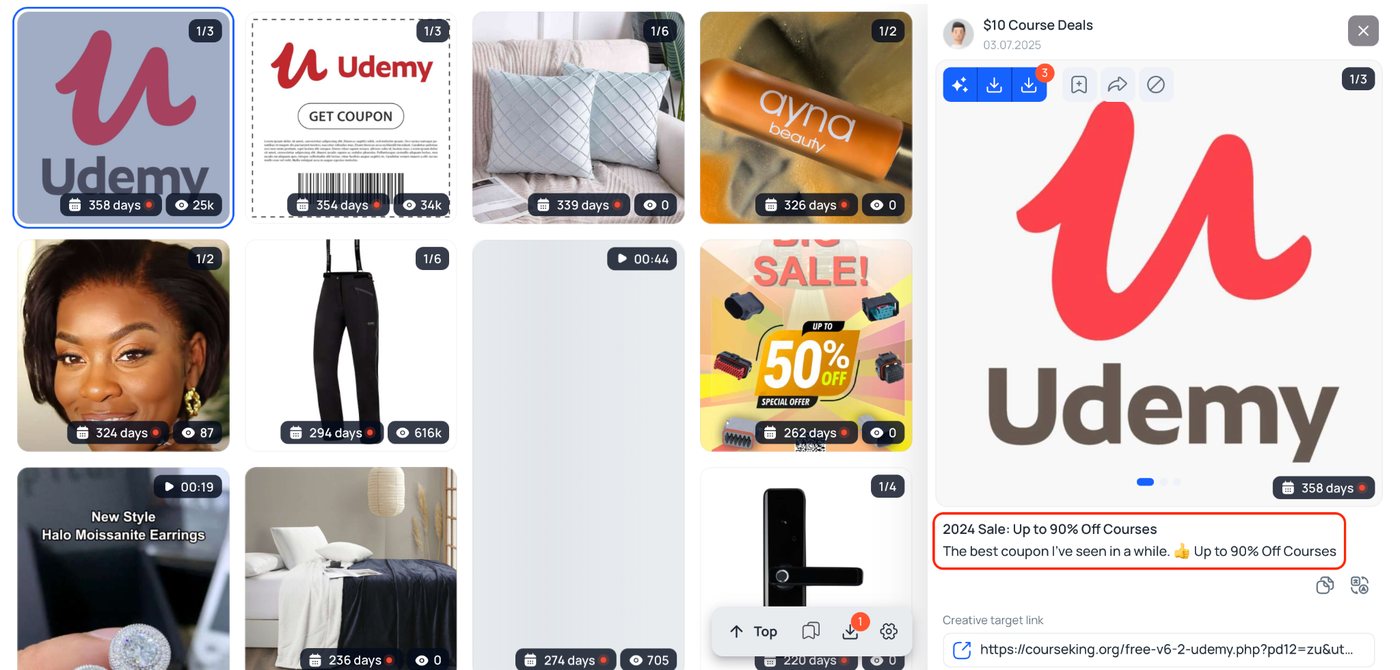
Saving money on one of the most popular educational platforms seems a legit offer.
The classic before-and-after format remains effective because it visualizes transformation. Whether showing any progress, cleaner living spaces, improved financial results or productivity gains, contrasting two clear outcomes allows users to imagine achieving similar results themselves.

The “after” eyebrows seem thicker.
Tyver.io helps affiliate marketers discover high-performing creatives, analyze how competitors use psychological triggers and the AIDA framework, and identify patterns behind successful campaigns.
How to Look for Creatives in Tyver
One of Tyver's biggest strengths is that you can search for creatives across any vertical. To demonstrate how the platform works, let's have a look at two of the most popular niches: gambling and nutra.
Tyver has an advanced system of filters, but keyword search alone does not always give relevant results. You have to combine them and use in-built tools.
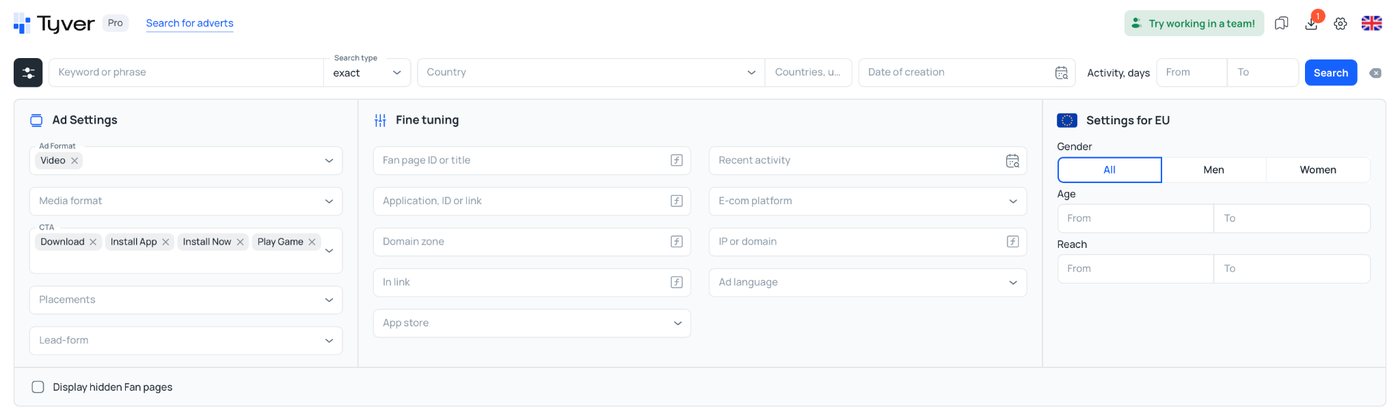
Search for gambling ads is easy thanks to a dedicated filter. Instead of manual research you can open a list of the most popular offers and see highly relevant results. Selecting Chicken road instantly reveals more than 75,000 creatives, which can be sorted by activity days of ad reach to see the best performing ones.
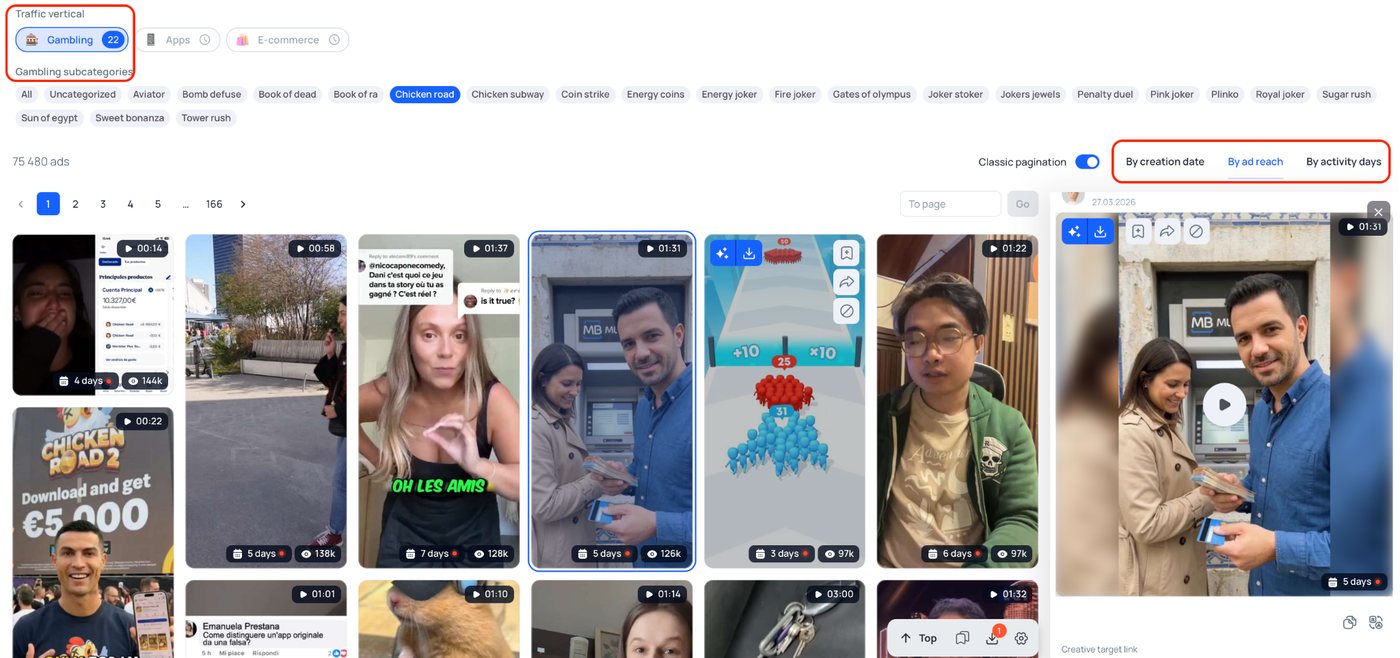
Choosing other popular titles gives more examples, making it easy to compare successful visuals, messaging and approaches. Search relevance is reaching up 99% so that you can spend less time filtering results.
Add filters relevant to gambling like video format, CTA and geo, and you will get an ads collection that works well on the market right now.
The approach in Nutra slightly differs. You can search by health problem, product or the exact offer name. For example, one of the most popular weight reduction supplements is Reduslim. Put it into the keyword field and get the selection of the relevant ads with different approaches.

Opening one of them and exploring the Related Ads section significantly expands the pool, revealing additional variations, geos and landing pages.
Once the ideas are collected, you need AIO – a service that brings together analytics, tracking, automation and team management. It lets you instantly split-test the creatives you've found on the landing page, distribute them by weight or run smart distribution so the system finds the best-performing variant for a given audience on its own. AIO tracks how each creative decision affects campaign results across different traffic sources, automates reporting by cohort and segment and quickly shows which variations deliver the best ROAS – without manually cross-checking data from separate tools.
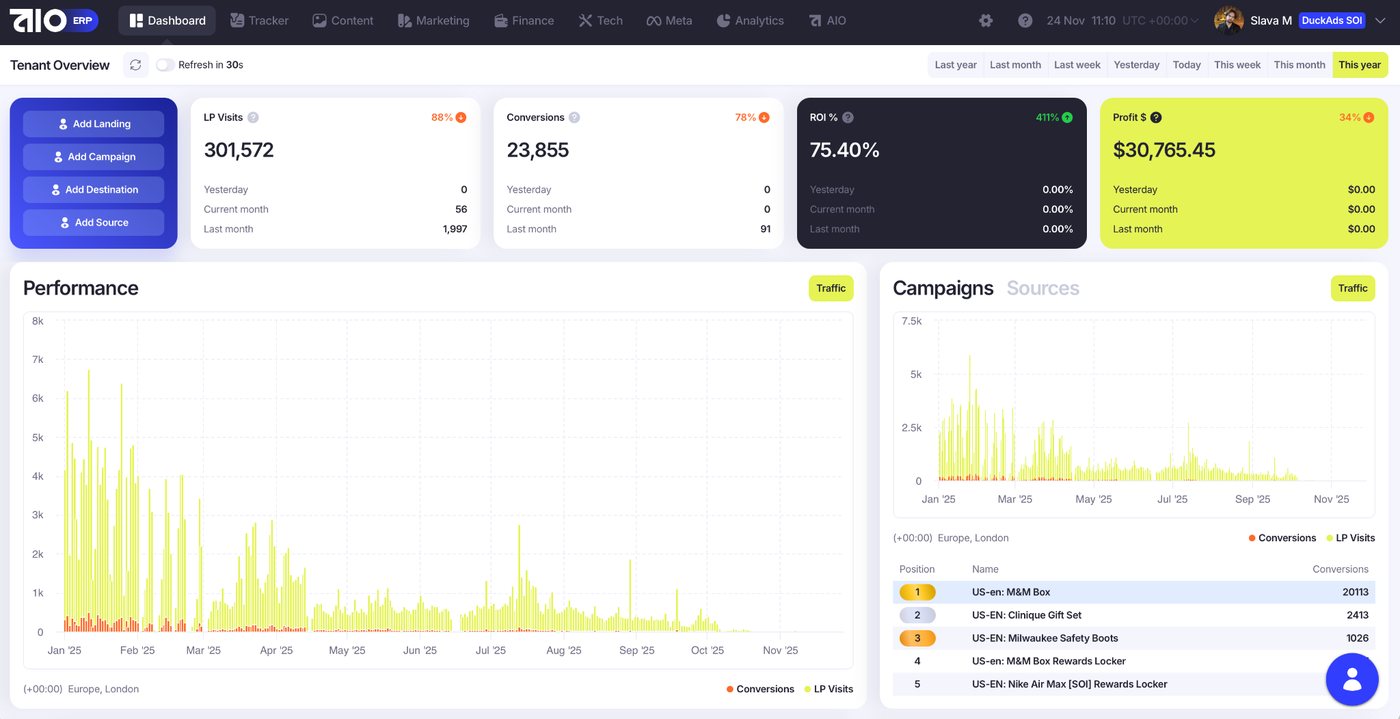
Together, these two platforms create a workflow where winning creative concepts can be discovered, tested, optimized and scaled far more efficiently than relying on trial and error alone.
Conclusion
Successful creatives are built by combining proven psychological principles rather than relying on inspiration alone. Attention, interest, desire and action become significantly more effective when reinforced by social proof, authority, scarcity, emotional storytelling and clear visual transformation. These elements combined together create advertisements that are far more likely to capture attention, generate clicks and convert the right audience.

